

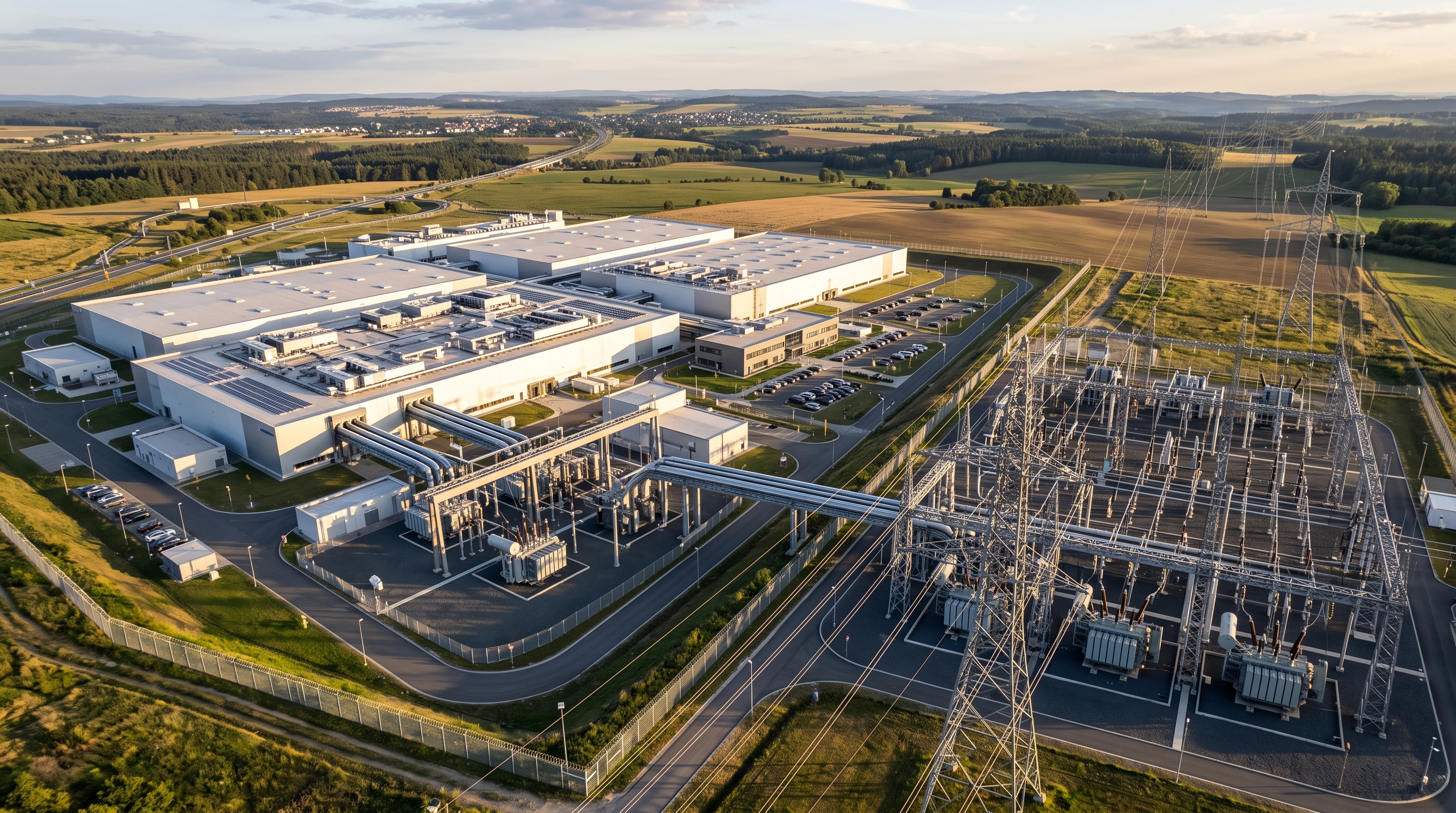

As demand for cloud computing, artificial intelligence (AI), and digital services grows, communities across the United States are attracting increasing interest from hyperscale data center developers. This policy brief summarizes research by Saurav Roychoudhury of Capital University and Justin M. Ross of Indiana University's O'Neill School examining the potential economic impacts of a hypothetical hyperscale data center campus in Northwest Indiana.
Using the U.S. Bureau of Economic Analysis Regional Input-Output Modeling System (RIMS II), researchers estimated the employment, earnings, and economic output associated with constructing and operating data centers ranging from 0.5 to 1.5 gigawatts in size. The study examines how construction, utilities, maintenance, supplier purchases, and other business-to-business spending would generate economic activity.
The findings highlight the substantial economic activity that data centers can generate while also demonstrating that economic impacts differ from broader measures of community benefit. The brief offers insights for policymakers, utility providers, economic development practitioners, and local governments evaluating large-scale data center proposals.
